Why ‘Document Centralization’ Is a Must for the Defense Industry
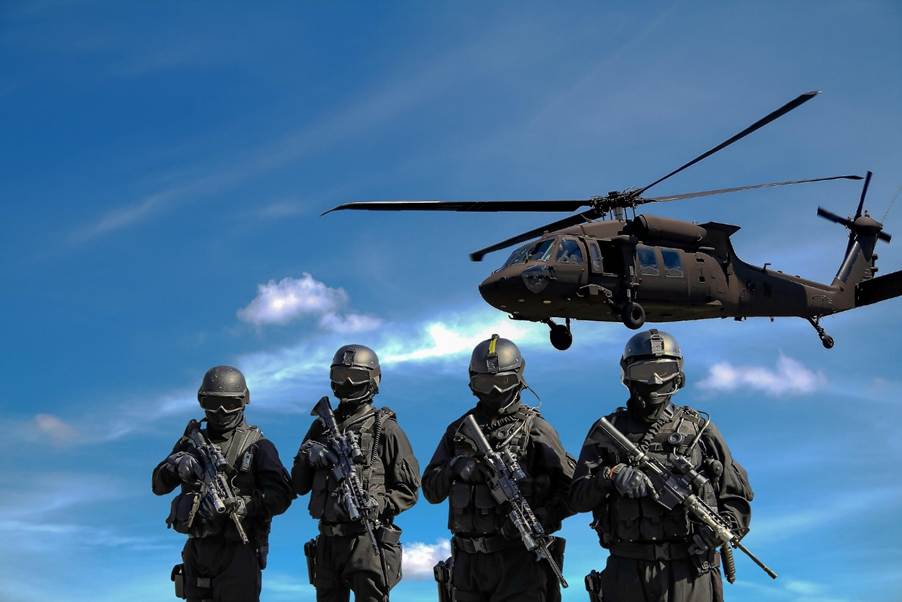
As K-defense rises on the global stage, the threats targeting our core technology assets are getting more sophisticated.
With leak attempts surrounding critical technologies such as advanced weapon systems becoming more frequent,
document centralization, the practice of managing and operating scattered design files and
technical documents from one central location, is no longer an option, but a must. Let's dive into why.
01. Why is Security Now a Top Priority in the Defense Industry?
Korea's defense industry is getting a lot of attention.
Korean weapon systems integrating advanced domestic defense technologies are rapidly carving out a major share of
the global market.
But here's the catch: the more attention we get, the more eyes are also on our technology.
According to Korea’s National Office of Investigation, a total of 179 technology leakage cases*
involving 378 individuals were reported in 2025 alone, marking a staggering 45.5% year-over-year increase.
Just looking at the numbers, you can feel how quickly the threat is escalating.
Defense industry technology isn't just a trade secret. It's a national security asset.
And once it's out, there's no taking it back, which sets the defense industry apart from any other in terms of stakes.
02. Real-World Leak Cases
Case 1 │ 20GB of Core Technology Nearly Smuggled Out on 7 USB Sticks
In 2024, Indonesian engineers dispatched to Korea for the joint development of the Korea's next-generation fighter jet,
were caught attempting to smuggle technical data out on USB drives.
The confiscated data included military strategic items and defense science documents totaling
over 20GB across 7 USB drives*. That's an enormous amount.
But here's what's truly unsettling: the people behind this weren't outside hackers.
They were officially approved partner personnel.
The fact that someone could walk out with that much critical data on a few USB sticks in the course of normal work
shows exactly why media control, export restrictions, and audit trails matter so much in the defense industry.
What if storage controls on external media and download alerts had been in place?
Case 2 │ Next-Gen Tank Core Technology At Risk Amid Staff Departures
Researchers at a defense contractor were lured to a competitor with significantly higher salaries. On their way out,
they took the core technology behind one of K-defense's top export products with them. Specifically,
they copied the design files, development reports, and defense-related materials for the tank's CBRN overpressure
system onto an external hard drive and walked away with the whole thing.
It gets worse. There's evidence that the new company used this stolen technology to pursue export deals with a
Middle Eastern country and even closed some contracts.
The takeaway is clear: resignation and job-switching moments are the most vulnerable leak windows.
If a centralized document management system had been in place, one that tracked access history and managed
documents from a central location, the damage could have looked very different.
03. With Security Solutions Already in Place, Why Did These Leaks Still Happen?
Defense companies already operate a full stack of security tools — DRM, DLP, NAC, network segmentation, you name it.
So why do tech leaks keep happening?
The answer is surprisingly simple. It's because the "documents themselves", where they resides,
what version is the latest, often aren't actually being tracked.
When documents are scattered across user PCs, two major threats become impossible to defend against:
① Leaks at the Resignation or Departure Moment
As we saw in the K-2 tank case, when critical technical data resides on a researcher's personal PC,
the moment they leave becomes the highest-risk window. According to Proofpoint's 2024 Data Loss Landscape Report*,
87% of abnormal file exfiltration in cloud environments comes from departing employees.
That's not a small number, it's basically all of it.
The data itself is telling us exactly why exit-stage security reviews matter.
② External Hacking and Malicious Attacks
North Korean threat groups like Lazarus and Kimsuky have one favorite first target: user PCs.
When documents are scattered across personal devices, a single infection can lead to immediate asset loss,
and anything without a backup is gone for good.
Throw in PC failures and data lost during employee departures, and you start to see that scattered storage
it self is the real risk.
04. The Solution: Document Centralization
The most direct way to tackle these problems? Document centralization.
In a nutshell, document centralization is a system that forces every document generated within a company to be stored and managed on a central server, not on individual PCs.
It's different from a regular file server or cloud storage.
By controlling local storage at the PC level and treating the central server as the single source of truth,
it brings security policy, document lifecycle, audit history, and access permissions all under one unified roof.
Cyberdigm's Destiny ECM is one of the leading solutions. Since its founding in 1998, it has been deployed at
1,400+ companies over 28 years, serving over 1.1 million users with a consistent R&D investment of 25%+ of revenue.
It also holds ISO 27001 certification, the international standard for information security management,
making it well-suited for high-stakes industries like defense, finance, and the public sector.
So what does document centralization actually do for a defense company? Here’s three main things:
① Asset Management │ Turning Scattered Documents Into Real Corporate Assets
All the documents a defense company produces daily, such as design files, test reports, technical specs, contracts,
official letters, etc., get gathered and managed on a central server. Even paper documents received via copier or fax can
be scanned and converted into digital assets. And duplicate files are cleaned up automatically, which also helps with
storage efficiency.
② Security │ Strong Control and Lifecycle Management
The cornerstone is PC storage control. By blocking local drive storage outright, the system enforces a "central server
only" rule, meaning technical data simply can't be scattered across personal PCs to begin with. On top of that,
granular access permissions can be assigned by department, user, position, or device, so even within the same folder,
control is tailored to each individual. External exports require manager approval, and MFA combined with bulk download
alerts immediately blocks any abnormal activity. Even if an external attack does occur, sandboxing and encrypted
storage keep the originals safe, and quick restoration is possible using the version control feature.
③ Collaboration │ Where Security and Productivity Work Together
Worried that tighter security might slow your team down? Destiny ECM is designed to handle both at once.
Its UI is identical to Windows Explorer, so the learning curve is virtually zero, and the same access is available externally
through a web explorer. Collaboration also gets smarter. Instead of attaching heavy files, you can share documents via
URL, with the option to revoke access or set expiration dates whenever needed. Real-time co-editing lets multiple
people work on the same document without version conflicts. For the defense industry, where partner collaboration is
constant, the External Shared Folder feature is especially useful: you can exchange files safely while still blocking local
storage through device controls.
05. Deployment Cases
LIG Defense&Aerospace, one of Korea's "Big 3" defense companies, is currently running Destiny ECM.
Curious what changed in their day-to-day operations? Here's an real feedback from the DX team:
Read the full interview: https://www.cyberdigm.co.kr/interview/?bmode=view&idx=171282029
"The biggest change after implementation was that documents which had been scattered all over the place are now managed through a single integrated server, giving us much stronger document control across the entire organization. On the practical side, day-to-day usability has improved as well. I'd recommend this solution to any company that lacks a document management system, or any organization in the defense industry or large enterprise environment where security is mission-critical."
— LIG Defense & Aerospace, DX Team
As K-defense expands its global footprint, what defines a defense company's competitive edge isn't just
"what you can build." It's just as much about "what you can protect." With 28 years of document centralization
expertise, Cyberdigm is here to help you make that starting point a strong one.
Reference:
1. “Technology Leakage Crimes Reached 179 Cases (378 Individuals) in 2025, Up 45.5% Year-over-Year,” Sideview
2. “Report on the Removal of 20GB of Data Stored on Seven USB Drives,” KBS News
3. “2024 Data Loss Landscape Report,” Article Related to Proofpoint, CIO Korea



Why ‘Document Centralization’ Is a Must for the Defense Industry
As K-defense rises on the global stage, the threats targeting our core technology assets are getting more sophisticated.
With leak attempts surrounding critical technologies such as advanced weapon systems becoming more frequent,
document centralization, the practice of managing and operating scattered design files and
technical documents from one central location, is no longer an option, but a must. Let's dive into why.
01. Why is Security Now a Top Priority in the Defense Industry?
Korea's defense industry is getting a lot of attention.
Korean weapon systems integrating advanced domestic defense technologies are rapidly carving out a major share of
the global market.
But here's the catch: the more attention we get, the more eyes are also on our technology.
According to Korea’s National Office of Investigation, a total of 179 technology leakage cases*
involving 378 individuals were reported in 2025 alone, marking a staggering 45.5% year-over-year increase.
Just looking at the numbers, you can feel how quickly the threat is escalating.
Defense industry technology isn't just a trade secret. It's a national security asset.
And once it's out, there's no taking it back, which sets the defense industry apart from any other in terms of stakes.
02. Real-World Leak Cases
Case 1 │ 20GB of Core Technology Nearly Smuggled Out on 7 USB Sticks
In 2024, Indonesian engineers dispatched to Korea for the joint development of the Korea's next-generation fighter jet,
were caught attempting to smuggle technical data out on USB drives.
The confiscated data included military strategic items and defense science documents totaling
over 20GB across 7 USB drives*. That's an enormous amount.
But here's what's truly unsettling: the people behind this weren't outside hackers.
They were officially approved partner personnel.
The fact that someone could walk out with that much critical data on a few USB sticks in the course of normal work
shows exactly why media control, export restrictions, and audit trails matter so much in the defense industry.
What if storage controls on external media and download alerts had been in place?
Case 2 │ Next-Gen Tank Core Technology At Risk Amid Staff Departures
Researchers at a defense contractor were lured to a competitor with significantly higher salaries. On their way out,
they took the core technology behind one of K-defense's top export products with them. Specifically,
they copied the design files, development reports, and defense-related materials for the tank's CBRN overpressure
system onto an external hard drive and walked away with the whole thing.
It gets worse. There's evidence that the new company used this stolen technology to pursue export deals with a
Middle Eastern country and even closed some contracts.
The takeaway is clear: resignation and job-switching moments are the most vulnerable leak windows.
If a centralized document management system had been in place, one that tracked access history and managed
documents from a central location, the damage could have looked very different.
03. With Security Solutions Already in Place, Why Did These Leaks Still Happen?
Defense companies already operate a full stack of security tools — DRM, DLP, NAC, network segmentation, you name it.
So why do tech leaks keep happening?
The answer is surprisingly simple. It's because the "documents themselves", where they resides,
what version is the latest, often aren't actually being tracked.
When documents are scattered across user PCs, two major threats become impossible to defend against:
① Leaks at the Resignation or Departure Moment
As we saw in the K-2 tank case, when critical technical data resides on a researcher's personal PC,
the moment they leave becomes the highest-risk window. According to Proofpoint's 2024 Data Loss Landscape Report*,
87% of abnormal file exfiltration in cloud environments comes from departing employees.
That's not a small number, it's basically all of it.
The data itself is telling us exactly why exit-stage security reviews matter.
② External Hacking and Malicious Attacks
North Korean threat groups like Lazarus and Kimsuky have one favorite first target: user PCs.
When documents are scattered across personal devices, a single infection can lead to immediate asset loss,
and anything without a backup is gone for good.
Throw in PC failures and data lost during employee departures, and you start to see that scattered storage
it self is the real risk.
04. The Solution: Document Centralization
The most direct way to tackle these problems? Document centralization.
In a nutshell, document centralization is a system that forces every document generated within a company to be stored and managed on a central server, not on individual PCs.
It's different from a regular file server or cloud storage.
By controlling local storage at the PC level and treating the central server as the single source of truth,
it brings security policy, document lifecycle, audit history, and access permissions all under one unified roof.
Cyberdigm's Destiny ECM is one of the leading solutions. Since its founding in 1998, it has been deployed at
1,400+ companies over 28 years, serving over 1.1 million users with a consistent R&D investment of 25%+ of revenue.
It also holds ISO 27001 certification, the international standard for information security management,
making it well-suited for high-stakes industries like defense, finance, and the public sector.
So what does document centralization actually do for a defense company? Here’s three main things:
① Asset Management │ Turning Scattered Documents Into Real Corporate Assets
All the documents a defense company produces daily, such as design files, test reports, technical specs, contracts,
official letters, etc., get gathered and managed on a central server. Even paper documents received via copier or fax can
be scanned and converted into digital assets. And duplicate files are cleaned up automatically, which also helps with
storage efficiency.
② Security │ Strong Control and Lifecycle Management
The cornerstone is PC storage control. By blocking local drive storage outright, the system enforces a "central server
only" rule, meaning technical data simply can't be scattered across personal PCs to begin with. On top of that,
granular access permissions can be assigned by department, user, position, or device, so even within the same folder,
control is tailored to each individual. External exports require manager approval, and MFA combined with bulk download
alerts immediately blocks any abnormal activity. Even if an external attack does occur, sandboxing and encrypted
storage keep the originals safe, and quick restoration is possible using the version control feature.
③ Collaboration │ Where Security and Productivity Work Together
Worried that tighter security might slow your team down? Destiny ECM is designed to handle both at once.
Its UI is identical to Windows Explorer, so the learning curve is virtually zero, and the same access is available externally
through a web explorer. Collaboration also gets smarter. Instead of attaching heavy files, you can share documents via
URL, with the option to revoke access or set expiration dates whenever needed. Real-time co-editing lets multiple
people work on the same document without version conflicts. For the defense industry, where partner collaboration is
constant, the External Shared Folder feature is especially useful: you can exchange files safely while still blocking local
storage through device controls.
05. Deployment Cases
LIG Defense&Aerospace, one of Korea's "Big 3" defense companies, is currently running Destiny ECM.
Curious what changed in their day-to-day operations? Here's an real feedback from the DX team:
Read the full interview: https://www.cyberdigm.co.kr/interview/?bmode=view&idx=171282029
"The biggest change after implementation was that documents which had been scattered all over the place are now managed through a single integrated server, giving us much stronger document control across the entire organization. On the practical side, day-to-day usability has improved as well. I'd recommend this solution to any company that lacks a document management system, or any organization in the defense industry or large enterprise environment where security is mission-critical."
— LIG Defense & Aerospace, DX Team
As K-defense expands its global footprint, what defines a defense company's competitive edge isn't just
"what you can build." It's just as much about "what you can protect." With 28 years of document centralization
expertise, Cyberdigm is here to help you make that starting point a strong one.
Reference:
1. “Technology Leakage Crimes Reached 179 Cases (378 Individuals) in 2025, Up 45.5% Year-over-Year,” Sideview
2. “Report on the Removal of 20GB of Data Stored on Seven USB Drives,” KBS News
3. “2024 Data Loss Landscape Report,” Article Related to Proofpoint, CIO Korea